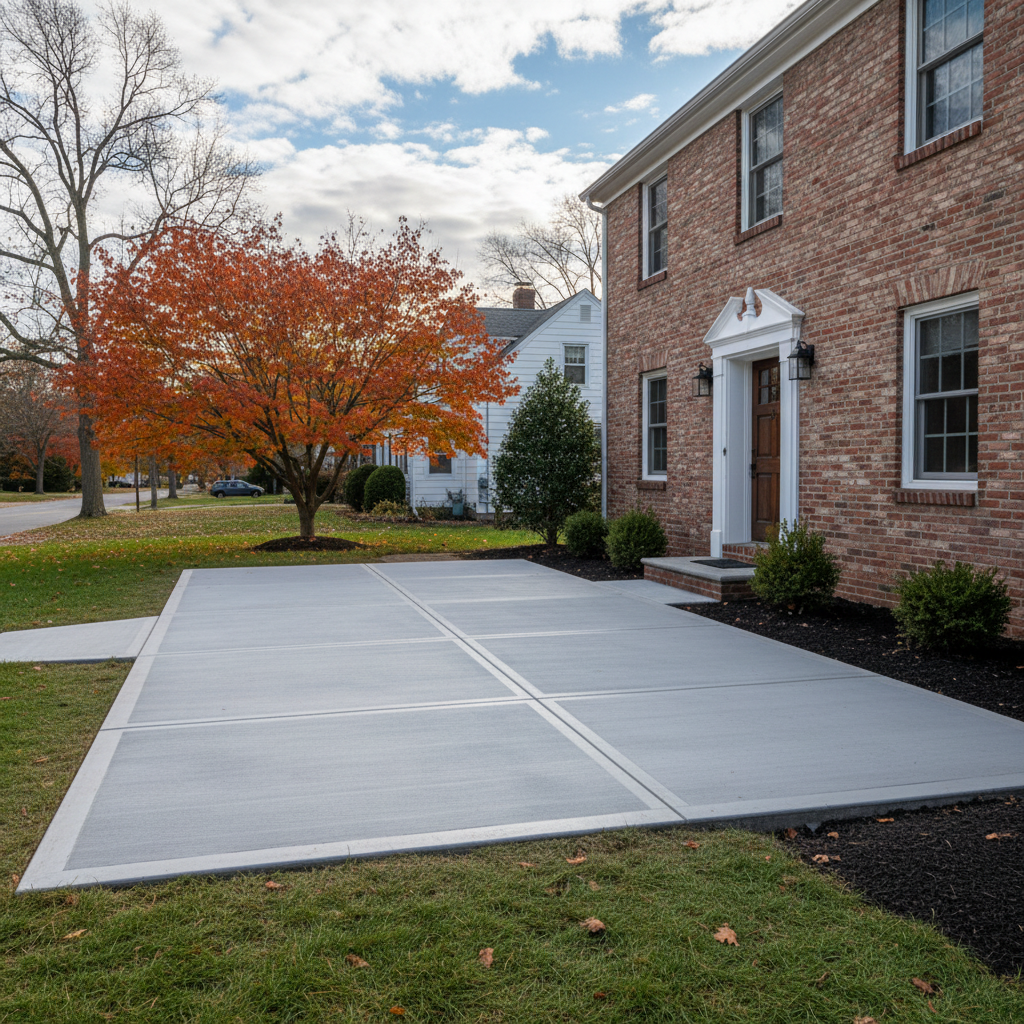
Pouring concrete in Boston is not like working out in the suburbs. Between tight triple-decker spacing in Dorchester, strict parking permit rules in the South End, and our brutal freeze-thaw cycles that wreck cheap work, the numbers look different here. If you are planning a new driveway, patio, or foundation repair, you need straight numbers instead of vague estimates.
Most standard residential concrete installations in the Boston area run between $8 and $18 per square foot for basic flatwork. If you are putting in a simple 400-square-foot backyard patio, the cost is roughly $3,500 to $6,000 total. A full driveway replacement with tear-out and haul-away usually lands between $8,000 and $15,000 depending on square footage and site access.
What Drives the Cost Up in Boston?
Access is everything around here. If our crew can back a ready-mix truck right up to the pour site, your labor costs stay reasonable. But if we have to run wheelbarrows down a narrow alleyway in Somerville or set up a concrete pump truck because your backyard is locked behind a brick rowhouse, expect the price to jump by 20 to 30 percent. Demolition and disposal also add up fast. Hauling old, cracked New England concrete to a local recycling facility is not cheap, and dump fees keep climbing.
Sub-base preparation is another major factor. Boston's clay-heavy soil and wet springs mean we cannot just pour concrete over dirt. We have to dig down, haul away the native muck, and lay down at least six inches of crushed gravel compacted tightly so your slab does not shift when the ground freezes solid in January.
What Should Be Included in a Real Quote?
When you get an estimate from Camchris Construction Company or any other reputable local contractor, it should not just be a single lump sum scribbled on the back of a business card. A professional quote needs to spell out the exact scope of work.
- Demolition and removal of existing material
- Excavation depth and crushed stone base preparation
- Steel reinforcement like wire mesh or rebar
- Concrete mix strength, usually a minimum of 4,000 PSI with air entrainment to fight salt damage
- Formwork, pouring, finishing, and saw-cut control joints
If a quote leaves out sub-base prep or reinforcement, run away. Skipping those steps saves a dishonest contractor money today, but your brand new slab will crack and heave within two winters.
How to Avoid Overpaying
Get at least three itemized bids, but do not automatically pick the cheapest one. Lowball bids in this business almost always mean the contractor is cutting corners on concrete thickness, skipping the rebar, or planning to hit you with hidden change orders once the job starts.
Make sure whoever you hire is fully licensed and carries both general liability and workers' compensation insurance. If an uninsured worker gets hurt on your property in Brookline or Cambridge, you could be on the hook. Ask to see photos of recent local projects and drive by to look at them if you have time. Real-world durability is the only test that matters.
Doing concrete right the first time saves you from breaking it up and starting over five years down the road. Keep your site conditions in mind, demand a detailed breakdown of the work, and make sure your contractor builds it to survive a New England winter.